An industrial fire sprinkler system protects much more than square footage. It may be responsible for protecting employees, specialized machinery, raw materials, finished inventory, production lines, storage systems, valuable equipment, and an operation that cannot afford prolonged interruption. That combination makes industrial fire protection one of the most demanding areas of sprinkler design and service.
At Armor Automatic Sprinkler, we understand that an industrial property cannot simply be treated like a larger office building. Manufacturing facilities, warehouses, processing operations, distribution centers, and other industrial environments can present unique fire hazards requiring specialized knowledge and carefully engineered solutions.
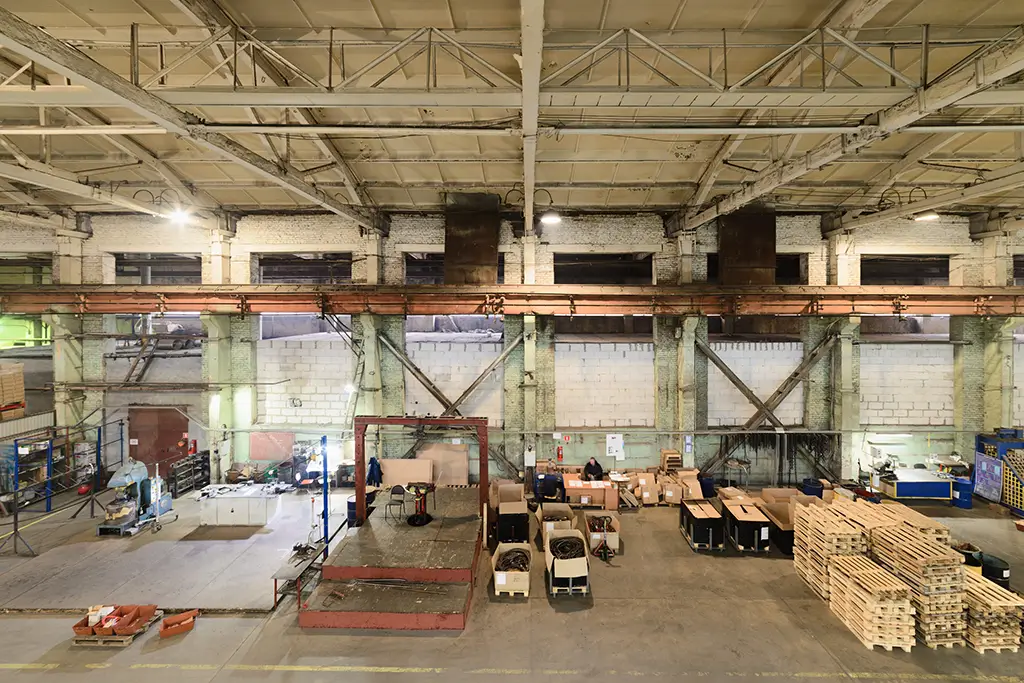
Fire Protection for Large Industrial & Warehouse Facilities in NJ
Industrial Fire Protection Is a Different Level of Responsibility
The objective is not simply to satisfy a requirement. It is to create and maintain fire protection appropriate for the actual hazards, processes, storage arrangements, and operating conditions within the facility.
Industrial Sprinklers Are Not Just Bigger Commercial Systems
Residential sprinkler systems primarily focus on life safety in living environments. Smaller commercial systems may protect offices, retail spaces, restaurants, and other relatively conventional occupancies. Industrial properties can introduce an entirely different level of complexity. Ceiling heights may be dramatically greater. Storage can extend vertically through large portions of the building. Machinery can obstruct sprinkler discharge. Manufacturing processes can introduce heat, oils, combustible materials, flammable liquids, plastics, aerosols, chemicals, or other specialized hazards.
The sprinkler system must therefore correspond to the nature of the fire that could realistically develop. An industrial system may involve specialized sprinklers, fire pumps, standpipes, in rack sprinklers, Early Suppression Fast Response systems, deluge protection, water spray systems, or other fire protection strategies depending on the facility. There is no intelligent one size fits all solution for industrial fire protection.
What You Store Can Be as Important as Where You Store It
One of the most important concepts in industrial sprinkler protection is commodity classification. Two warehouses with identical dimensions and identical racks can present dramatically different fire protection challenges because they contain different products. A facility storing predominantly metal components presents a very different potential fire than a warehouse containing plastics, foam products, aerosols, rubber goods, or highly combustible packaged merchandise. Even packaging can influence the hazard because cartons, plastic wrapping, pallets, and other materials contribute fuel to a developing fire.
Storage height matters as well. Fire moving vertically through rack storage can develop rapidly, creating intense heat and challenging ceiling level sprinklers. This is why experienced industrial fire protection professionals need to understand more than the building. We need to understand what the building is being used to store, manufacture, or process.
A Lesser Known New Jersey Lesson About High Piled Storage
New Jersey has provided particularly useful guidance on high piled and rack storage that illustrates just how important this distinction can be. The state’s Department of Community Affairs has previously explained that high piled combustible storage requirements can apply based upon the area devoted to the storage, rather than simply the overall square footage of the building.
That is an important concept.
An industrial operator should never assume that a building is too small to have significant high piled storage considerations. Rack configuration, storage height, commodity type, aisle arrangements, shelving, and the amount of space devoted to storage can all become relevant. This also demonstrates why operational changes matter. A warehouse may not undergo any construction whatsoever, yet changing from floor storage to taller racks or introducing a different commodity can potentially change the fire protection challenge. The building stayed the same. The hazard didn’t.
Industrial Fire Sprinkler Design Begins With Understanding the Operation
Before determining the appropriate protection strategy, experienced professionals need to understand what actually happens inside the facility.
- What is manufactured?
- What materials are stored?
- How high are products stored?
- Are combustible or flammable materials present?
- What type of shelving and racks are used?
- Could machinery obstruct sprinkler discharge?
- Does the facility operate around the clock?
- What is the available water supply?
- Those questions aren’t administrative details.
- They help define the fire protection problem that must be solved.
– Those questions aren’t administrative details. They help define the fire protection problem that must be solved.
A sophisticated industrial sprinkler design considers the relationship between the hazard and the available suppression capability. That can require hydraulic calculations, water supply analysis, appropriate sprinkler selection, careful piping design, and coordination with other building systems. Precision at this stage can influence the performance of the system for decades.
Water Supply Can Become a Major Engineering Consideration
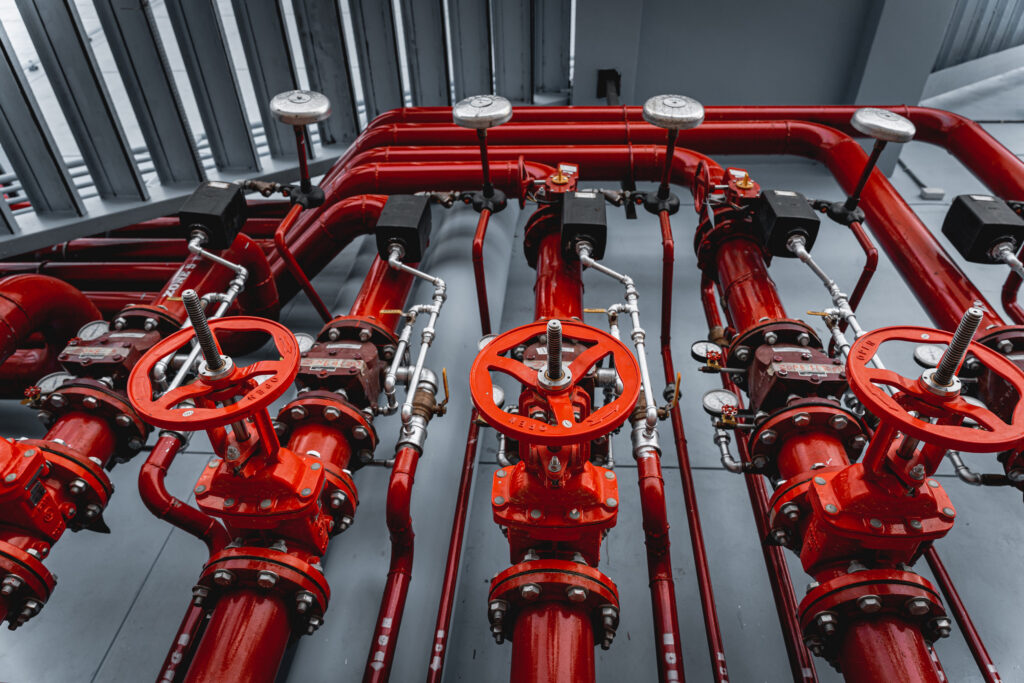
Industrial sprinkler systems may require substantial water flow and pressure, particularly when protecting large facilities, high storage arrangements, or challenging hazards. The municipal water supply alone may not always provide what the proposed protection requires. Depending on the facility, the overall system may involve a fire pump, dedicated water storage, larger piping, specialized sprinkler technology, or other engineering solutions.
This is where hydraulic calculations become critically important. Industrial fire protection should never be based on assumptions about water availability. The system must be designed around measurable conditions and the performance requirements associated with the hazard. An experienced fire sprinkler company understands how water supply, pipe sizing, sprinkler characteristics, elevation, friction loss, and system demand interact. Those relationships are technical, but the objective is remarkably simple: deliver the necessary water where it is needed when fire occurs.
ESFR and Rack Storage Require Specialized Knowledge
Modern warehouses can present extraordinary fire loads because businesses continually seek to store more products within the same footprint. One solution used in appropriate applications is ESFR, or Early Suppression Fast Response, sprinkler technology. ESFR systems are designed to respond aggressively to certain developing storage fires and, in suitable configurations, can reduce or eliminate the need for some in rack sprinkler arrangements. But ESFR is not simply a more powerful sprinkler head.
Its suitability depends on factors including commodity, storage arrangement, building height, sprinkler clearance, water supply, and system design criteria. Seemingly ordinary changes within a warehouse can therefore become important. Armor’s experience as a rack system specialist and with ESFR systems gives industrial customers access to expertise specifically relevant to these demanding environments.
Industrial Facilities Change Constantly
Industrial operations rarely remain static. A manufacturer purchases new equipment. A warehouse raises rack heights. A distributor begins storing different products. Production lines are rearranged. New mezzanines are constructed. Conveyors are installed. Inventory density increases. Each change can potentially interact with fire protection. New machinery may create sprinkler obstructions. Taller storage can alter protection requirements. A new commodity can present a more challenging fire hazard. Building additions can affect system demand.
For this reason, industrial fire protection should evolve with the operation. Before making substantial changes to storage, production, or building configuration, involving experienced fire protection professionals can help identify whether the existing sprinkler system remains appropriate.
Specialized Hazards May Require Specialized Suppression
Water based sprinkler protection is extraordinarily effective, but certain industrial hazards may require more specialized approaches. Facilities handling flammable liquids, petroleum products, chemicals, or particular manufacturing processes may need systems designed specifically for those hazards. Depending on the application, this could involve deluge systems, water spray, water mist, or foam based protection. New Jersey has an especially interesting current example involving foam systems.
The New Jersey Department of Community Affairs has discussed the transition away from certain PFAS containing firefighting foams used in facilities such as warehouses, petroleum terminals, refineries, chemical operations, and flammable liquid storage areas. An important detail is that converting to a PFAS free concentrate may not be as simple as draining one product and pouring in another. Different concentrates can have different characteristics and compatibility requirements, meaning existing fire suppression equipment may require professional evaluation or modification. That is exactly why industrial fire protection demands specialized expertise.
Regulations Become More Complex as Hazards Increase
Industrial facilities can sit at the intersection of numerous fire and building safety requirements. Occupancy classification, hazardous materials, storage configuration, fire areas, manufacturing processes, building construction, sprinkler design standards, fire pumps, alarm interfaces, and local requirements may all become relevant. New Jersey currently operates under its state adopted Uniform Construction Code framework, with the 2024 International Building Code forming the basis of the current Building Subcode with New Jersey modifications.
Experienced professionals must understand not only sprinkler technology but also how applicable requirements interact with the actual facility. Compliance should never be approached as simply checking boxes. The purpose behind these regulations is to create layers of protection appropriate to the risks people face inside the building.
Downtime Makes Industrial Fire Protection a Business Issue
Industrial fires can create financial consequences far beyond physical property damage. Imagine a specialized production line damaged by fire. Even if the building itself is repairable, replacement machinery may require months to manufacture and install. Raw materials may be destroyed. Customer orders may go unfilled. Employees may be unable to work, and supply chain relationships can be disrupted.
For some businesses, the greatest fire loss isn’t the building. It’s the interruption.
Effective sprinkler protection can help control a fire during its early development, limiting the opportunity for flames, heat, and smoke to spread throughout the facility. That makes fire protection part of business continuity planning as much as building safety. Protecting production means protecting profitability.
Inspection, Testing and Maintenance Are Especially Important in Industrial Environments
Industrial sprinkler systems operate in demanding environments. Temperature extremes, vibration, dust, corrosion, machinery, forklifts, storage activity, and constant building changes can all affect fire protection equipment. Regular professional inspection, testing, and maintenance therefore become extremely important. A damaged sprinkler in a quiet office might be unusual. In an active warehouse where forklifts continually move products beneath sprinkler piping, the potential for physical impact can be much greater.
Industrial facilities also benefit from strong documentation. Maintaining records of system modifications, testing, repairs, storage configurations, and other relevant changes can provide valuable continuity for facility managers and future fire protection professionals. The more complex the system, the more valuable organized information becomes.
Experience Matters When the Stakes Are This High
Industrial fire protection combines engineering, hydraulics, building construction, storage science, fire behavior, regulations, and practical field experience. That combination cannot be learned simply by looking at a set of sprinkler drawings. Experienced professionals understand how systems behave in real facilities. They recognize that a theoretically correct solution still needs to function around machinery, racks, production schedules, maintenance requirements, and employees.
They also understand that today’s industrial operation may look very different five years from now. The strongest fire protection strategy anticipates those realities and gives facility owners knowledgeable professionals they can continue working with as their operations evolve.
Why Choose Armor Automatic Sprinkler for Industrial Fire Sprinklers in NJ?
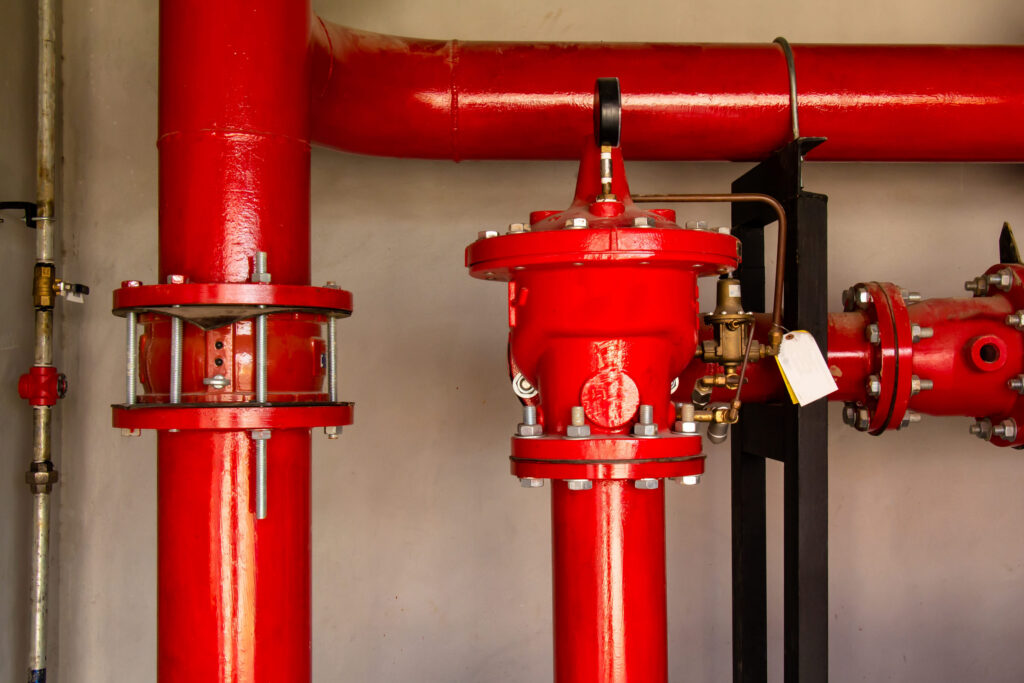
Armor Automatic Sprinkler provides comprehensive fire protection capabilities for demanding properties throughout New Jersey. Our services extend from engineering and design through installation, inspection, testing, maintenance, repair, and 24 hour emergency service. Our experience includes industrial buildings, warehouses, rack systems, ESFR systems, fire pumps, standpipes, deluge systems, water spray applications, and other specialized fire protection solutions. That breadth of experience matters.
Industrial customers should not have to explain the fundamentals of their fire protection needs to a contractor accustomed only to straightforward residential or small commercial work. They deserve professionals who appreciate the complexity of industrial hazards and understand how seemingly minor operational changes can affect sprinkler protection. We bring that perspective to every project.
Protect Your Facility, Your People and Your Production
An industrial sprinkler system isn’t simply another mechanical system inside your building. It is part of the infrastructure protecting your workforce, equipment, inventory, production capability, and future operations. Whether you’re constructing a new industrial facility, expanding a warehouse, changing storage arrangements, upgrading an existing sprinkler system, or evaluating specialized fire protection needs, experienced guidance matters.
Contact Us Today to discuss your industrial fire sprinkler needs in New Jersey. Our team is ready to help you develop, maintain, and service fire protection designed around the real demands of your facility. We look forward to working with you!