Short answer: it depends on the part.
NFPA 25 has some checks happening every week, others monthly, quarterly, yearly, every three years, and every five years, and the sprinkler heads get tested once they’ve been in service for 50 years.
That’s a lot of calendars to keep track of. And here’s the problem. A sprinkler system can look totally fine while something’s wrong with it, and nobody finds out until there’s smoke.
So let’s sort it out, one interval at a time.
How often does NFPA 25 require sprinkler system inspections?
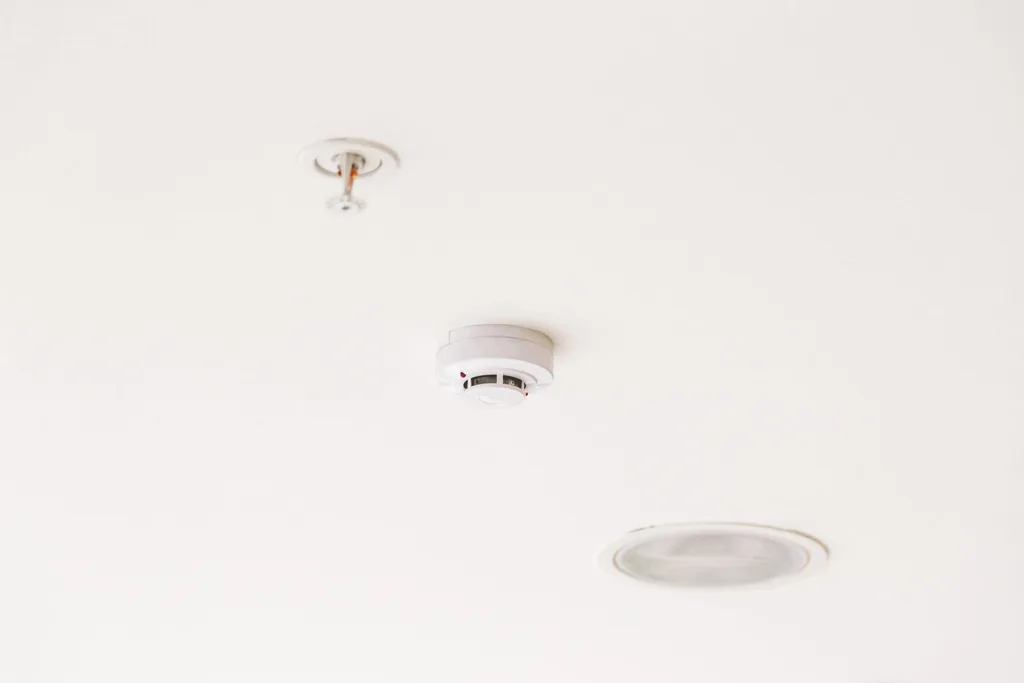
Fire Sprinkler System Inspection
Weekly, at the low end. Every five years at the high end, with the 50-year sprinkler test on top. NFPA 25, the standard that covers inspection, testing, and maintenance of water-based fire protection systems, gives each component its own schedule.
Here’s how that shakes out:
| How often | What gets checked |
| Weekly | Control valve position, backflow assembly (visual), gauges on dry, preaction and deluge systems |
| Monthly | Locked valve positions, wet system gauges, dry pipe valve exterior |
| Quarterly | Electrically supervised valves, alarm valve exteriors, waterflow alarm devices, fire department connections |
| Annual | Sprinkler heads, pipe and hangers, main drain test, antifreeze check, fire pump full-flow test |
| Every 3 years | Full-flow trip tests on dry, preaction and deluge systems |
| Every 5 years | Internal pipe assessment, gauge replacement or calibration, valve interiors, standpipe and FDC flow tests |
| At 50 years | Standard-response sprinklers tested, then every 10 years after |
Look at the top two rows. Weekly and monthly. That’s mostly just walking past and looking. Valve open? Gauge where it should be? Takes a minute. But a valve that got shut during some repair job and never reopened… that one minute is the difference.
What do “quarterly” and “annual” actually mean under NFPA 25?
Windows. Not exact dates. Quarterly means four times a year, at least 2 months apart, and annual means once a year with at least 9 months between visits.
Same idea for the longer ones. Three years is once every 36 months, no sooner than 30. Five years is every 60 months, no sooner than 54.
Why bother spelling that out? Because people try to bunch things up. You can’t do all four quarterly visits in one busy fall and call it a year. And an annual that drifts past its window is late, plain and simple, even if nothing in the building changed.
What gets checked during an annual sprinkler inspection?
The annual is the big visit. Heads, pipe, and hangers get a visual check, the main drain gets tested, antifreeze systems get checked, and any fire pump gets a full-flow test.
We start at the heads. Paint on them. Corrosion. A ceiling tile jammed up against one, or a stack of boxes way too close. Any of that can mess with how the water comes out.
The main drain test comes next. Open the drain, let it flow, watch the pressure. Then compare it to last time. If the numbers dropped, something upstream changed, maybe a valve that’s partly closed, maybe something in the supply line.
And antifreeze systems? Those live in the cold spots. Garages, loading docks, unheated stairwells. If the mix is off, the line can freeze. A frozen sprinkler line does nothing for you.
What happens at the five-year and 50-year marks?
Five years in, we look inside the pipes. That five-year visit adds an internal pipe assessment, new or recalibrated gauges, a look at valve interiors and flow tests on standpipes and fire department connections.
The inside of the pipe is the part nobody thinks about. Corrosion builds. Debris collects. None of it shows from the floor. You could pass every visual inspection for five years straight and still have a pipe that’s partly choked off.
Then the really long one. Standard-response heads get tested at 50 years in service, then every 10 years after. In an older building? Go look at the year stamped on a few heads. You might be due.
Which sprinkler checks can a building owner do between visits?
The looking part. Building staff can handle the weekly and monthly visual checks, like gauge readings, valve positions and keeping clutter away from heads, but the testing belongs with a licensed fire protection contractor.
Keep a log. Nothing fancy. Date, gauge reading, valve open or closed, initials. When a reading starts creeping, you’ll see it before an inspector does.
Hang on to every inspection report, too. Insurance carrier asks? Fire official shows up? Those reports are what you hand over.
Frequently asked questions
How often is a main drain test done?
Once a year. It’s part of the annual inspection.
When do sprinkler heads need to be tested or replaced?
Standard-response heads get tested at 50 years, then every 10 years after that. Painted, corroded or damaged heads get replaced when they’re found.
Do dry pipe systems need extra attention?
They do. Weekly gauge checks, a monthly look at the dry pipe valve, and a full-flow trip test every three years.
Who should do the annual inspection?
A licensed fire protection contractor. We hold Master Fire License #P00486 and inspect, test and repair both commercial and residential systems.
No idea when your system was last tested? It happens, and it’s an easy fix. Call Armor Automatic Sprinkler at 800-778-FIRE (3473), any time, since we run 24-hour emergency service. Over 20 years in the tri-state area. See our Services, learn more About Us, read up on sprinkler Safety, or reach out through Contacts.