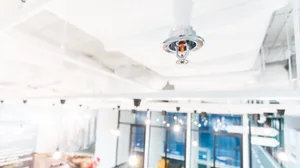
Fire sprinkler systems in commercial occupancies can help reduce fire, smoke, and water damage. According to the National Fire Protection Association, reductions in the average dollar loss per fire when sprinklers were present varied greatly by occupancy. The average overall loss was 11 percent lower in fires where sprinklers were present.
Reducing Property and Financial Loss
The percentage reductions were highest in health care occupancies, 73 percent, stores or offices, 70 percent, and public assembly occupancies, 63 percent.
A disruption in work due to the loss of a business from fire means employees are forced to find other places of employment. The result is a gap in earning wages for employees who are between jobs.
Reducing Deaths and Injuries
Does Your Business Have A Fire Sprinkler?
Fire sprinklers reduce the impact of fires and increase safety. According to NFPA, civilian fire deaths were 89 percent lower when compared to reported fires in properties with no automatic extinguishing systems. Civilian injury rates were 27 percent lower, and firefighter injuries per fire were 60 percent lower.
Fire spread was confined to the object or room of origin in 95 percent of reported structure fires in which fire sprinkler systems were present, compared to 71 percent in properties with no fire sprinkler system.
Protecting Vulnerable People
People with disabilities have the same odds of being in a building fire as those without. A fire sprinkler system buys time for people with mobility issues to escape a fire. The reduction in smoke and toxic gases allows more time for those with mobility issues to escape a building that experiences a fire.
Fires in commercial occupancies are confusing for people who are unfamiliar with building layouts. The elderly often move slower through those buildings, and children can become easily confused and scared when a fire starts. A fire sprinkler system reduces the risks for those people who are inside commercial occupancies when a fire starts.
People are creatures of habit. When a fire or other emergency occurs, people are most often found to go out the way they came in. The Station fire in Rhode Island in 2003 is an example of fire deaths that occurred because people did not exit the building through the closest area of egress. Fire sprinkler systems that suppress fires or hold them in check give the best chance of survival in the event people need to exit a burning building.
Financial Incentives for Businesses
The National Fire Sprinkler Association reports that insurance costs on buildings with fire sprinklers are significantly less than those without. NFSA reports savings of anywhere from 40 to 85 percent depending on the type of occupancy. The costs of the sprinkler system are tax-deductible.
The depreciation on the building itself, as well as the fire sprinkler system, can be deducted over the expected lifespan of the building. The incentive of a tax deduction helps the building owner recover some of the costs of construction. This makes fire suppression systems more attractive to building owners and developers.
Protecting Animals and Pets
Because of a boarding kennel fire in 2019 in Carol Stream, Illinois, the state of Illinois is requiring sprinkler systems for dog boarding facilities throughout the state. Pets are unable to escape fires in unsprinklered occupancies such as boarding kennels, veterinary hospitals, and pet stores. Installation of fire sprinkler systems helps to keep pets safe from the dangers of fires.
How the System Works
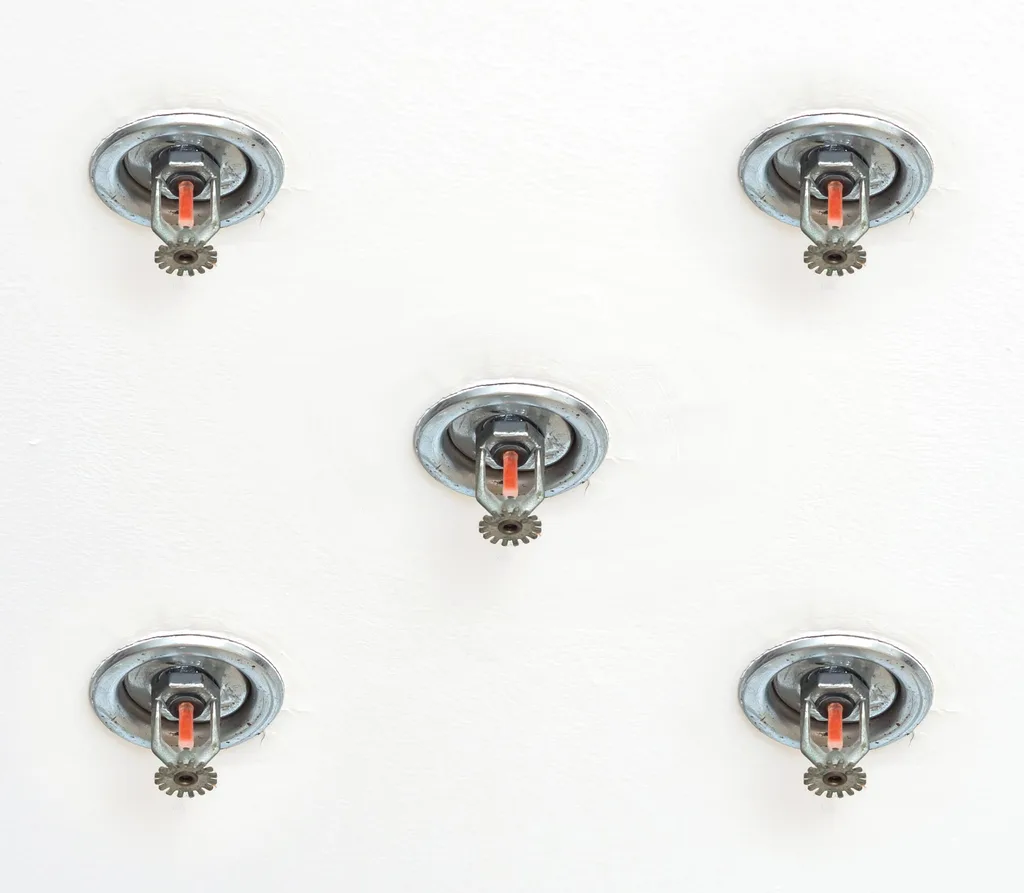
The fire sprinkler system’s top part is called a deflector, and the glass bulb in the center is called the temperature-sensitive glass tube, since its function is to sense temperature. Below the deflector is a ring called the ceiling plate, or sealing.
The glass tube is filled with a liquid mixture, either alcohol and water or glycerin and water. Orange glass bulbs are set at 57 degrees Celsius and are mostly used in homes or offices. Red glass bulbs have a temperature sensitivity of 68 degrees Celsius and are mostly used in living rooms or offices.
Yellow glass bulbs have a temperature sensitivity of 79 degrees Celsius and are mostly used in kitchens or small shops. Green glass bulbs have a temperature sensitivity of 93 degrees Celsius and are mostly used in hotel kitchens and larger commercial areas. Blue glass bulbs have a temperature of 141 degrees Celsius and are mostly used in industries or chemical plants.
Mauve glass bulbs have a temperature of 182 degrees Celsius, mostly used in oil industries and chemical plants.
How the System Is Installed
Water is stored and pressurized through pumps, then connected through pipes to every room in a building.
If a fire starts in a room, or if the temperature reaches the set limit, the sprinkler system turns on and water spreads to extinguish the fire or reduce the temperature, keeping the fire contained to its room of origin rather than spreading throughout the building.