The inspection report lands in your inbox, and page two lists deficiencies you didn’t expect. Boxes stacked too high in the back storeroom. A couple of heads somebody painted over during last spring’s renovation. A gauge with a 2017 date stamp. None of it felt urgent until now, when the fire marshal, your insurer or your property manager wants it fixed.
The items below are the ones that get written up on sprinkler inspection reports, and plenty of them are simple fixes once you know what to look for. The list goes like this: storage too close to sprinkler heads, painted, corroded, damaged or dirty heads, valves that aren’t sealed, locked or supervised, gauges past their five-year mark, a fire department connection that’s blocked or missing its caps, a short or missing spare sprinkler cabinet, loose hangers, missing escutcheons and missing signs. Catch them before the inspector does and the report reads a lot better.
Common deficiencies at a glance

Fire Sprinkler System in NJ
| Deficiency | What the inspector sees | Usual fix |
| Storage too close | Less than 18 inches between the deflector and the top of storage | Lower or move the storage |
| Painted heads | Paint that didn’t come from the manufacturer | Replace the head |
| Corroded, leaking or damaged heads | Rust, drips, bent or cracked frame arms | Replace the head |
| Loaded heads | Dust, grease or debris that won’t blow off | Replace the head |
| Unsecured control valves | Valves not sealed, locked or supervised | Seal, lock or supervise them |
| Old gauges | Gauges past five years without testing or replacement | Replace or test |
| FDC problems | Blocked, hard to see, or missing caps or plugs | Clear it, replace caps |
| Spare head cabinet | Missing, short on spares, or no wrench | Restock the cabinet |
| Hangers and escutcheons | Loose or damaged hangers, missing escutcheon plates | Repair or replace |
What actually counts as a deficiency?
It’s broader than “something’s broken.” The National Fire Sprinkler Association explains that since the 2014 edition, NFPA 25 has treated a deficiency as a condition that could hurt how the system performs without amounting to a full impairment. NFPA 25’s annex goes further and sorts problems into three buckets: noncritical deficiencies, critical deficiencies and impairments.
The same problem can land in different buckets depending on the building. NFSA gives the example of a painted sprinkler, which could be an impairment in a data center and a critical deficiency in a metal shop. Also worth knowing: under NFPA 25, the building owner is responsible for making sure the required inspections and testing get done. Your contractor reports what they find, and the authority having jurisdiction is the one who enforces it.
Why is storage such a common problem?
Because buildings change and nobody thinks about the ceiling. Racks go higher, or a stockroom fills up before the holidays. NFPA 25 requires at least 18 inches between the sprinkler deflector and the top of storage, and 36 inches for certain special sprinklers. Anything closer can block the spray pattern.
New shelving can cause the same trouble. A head blocked by a fresh row of shelves may no longer cover the area it was designed for. Walk the space, look up and see how close the tallest stack gets.
What’s wrong with painted or dirty sprinkler heads?
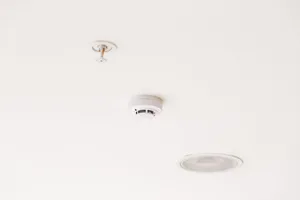
They might not open when they need to. If there’s any paint on a sprinkler that the manufacturer didn’t put there, the head needs to be replaced. That’s a common find after a renovation when the painters didn’t cover the heads. The same goes for heads that leak, are corroded enough to affect performance, or have bent or cracked frame arms.
Then there’s loading, meaning dust, grease or debris built up on the head. If a blast of compressed air won’t clean it off, the head gets replaced. And with glass bulb sprinklers, a bulb that has lost its fluid needs replacing too. A bulb that’s simply faded in color doesn’t.
Our post Fire Sprinkler Maintenance: Best Practices for Keeping Your System Reliable goes into how inspectors judge paint and loading.
Which valve problems fail an inspection?
Control valves have to be sealed, locked or supervised so nobody can shut the water off without someone knowing. They also need to be accessible and free of leaks, with the right signs on them. A valve closed during a repair and never reopened is one of the worst-case findings, because the sprinklers on that line look fine and won’t do anything. Weekly and monthly valve checks are there to catch exactly that.
What about gauges, the FDC and the spare head cabinet?
These are the small items that pile up on a report.
Gauges have to be replaced or tested every five years, and a broken or missing glass face counts as damage. The fire department connection has to be visible and easy to reach, with its caps or plugs in place, and signed. The 2018 New Jersey Fire Code also sets minimum working clearances around fire department connections, so a dumpster or a row of shrubs in front of it is a problem.
The spare head cabinet trips up a lot of buildings. NFPA requires at least 6 spare sprinklers for systems with fewer than 300 heads, 12 for 300 to 1,000, and 24 for more than 1,000, along with a sprinkler wrench and a list of the sprinklers installed. The spares should match the types you actually have in the building.
Do hangers and escutcheons really matter?
They do. Loose, damaged or unattached hangers, braces and supports get written up because they hold the piping where it was designed to be. A missing escutcheon plate around a sprinkler counts as a failure when that plate is part of the listed assembly, and those go missing all the time after ceiling work.
How do you avoid a failed inspection?
Stay on the schedule, and walk the building yourself between visits. Look up at the heads, check the storage height, glance at the valves and gauges, and make sure the FDC is clear. Our post How Often Should Fire Sprinkler Systems Be Inspected and Tested? lays out the full NFPA 25 calendar.
When something turns up, fix it early. Planned repairs are easier to schedule than an emergency call.
Frequently asked questions
What is the most common fire sprinkler deficiency?
There’s no official ranking, but storage too close to the heads and painted, corroded or damaged sprinklers turn up on a lot of reports.
How much clearance do sprinkler heads need from storage?
At least 18 inches between the deflector and the top of storage, and 36 inches for certain special sprinklers.
How many spare sprinkler heads do I need?
At least 6 for under 300 sprinklers, 12 for 300 to 1,000, and 24 for over 1,000, plus a sprinkler wrench.
Can a painted sprinkler head be cleaned?
No. Any sprinkler with paint that didn’t come from the manufacturer needs to be replaced.
Got a list of deficiencies to clear, or an inspection coming up? ARMOR Automatic Sprinkler has served New Jersey and the New York area for over 40 years under Master Fire License #P00486. Call 800-778-3473, or see our Fire Sprinkler Inspection, Fire Sprinkler Repair, Fire Sprinkler Maintenance and 24/7 Emergency services, or contact us.